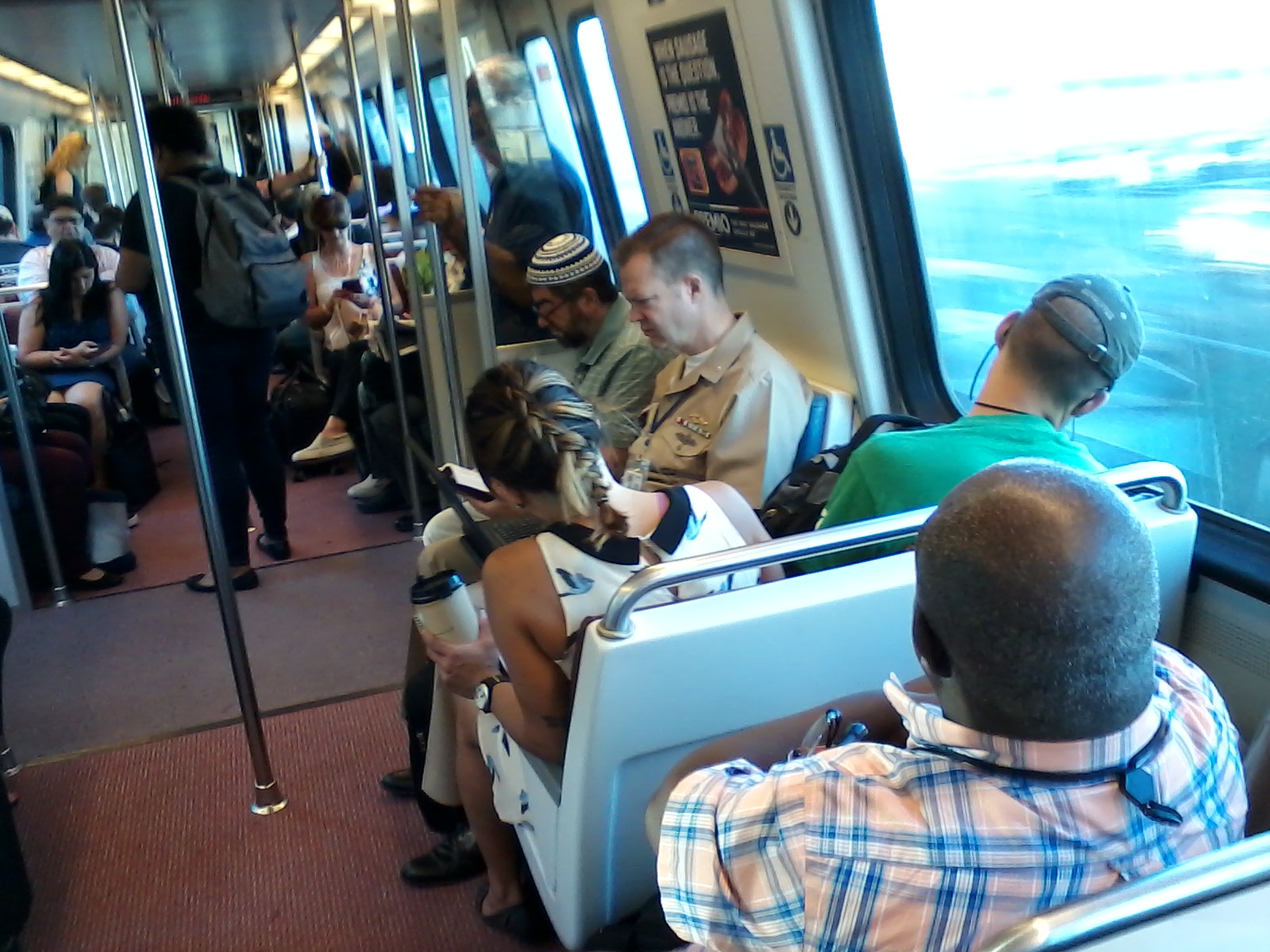
Public Transportation, for the People

My seat on the Metro train has an empty Bacardi bottle and a lime wedge.

The guy in the seat behind me is dancing along with the music in his headphones like nobody is watching.

The woman in the seat in front of me is talking on her phone. The contact on her phone says My Boo.

Sometimes, the person sitting across from me is reading a book in Chinese, and the person sitting next to me is reading a book in Russian.

Sometimes, street dancers will board the train and perform to loud music as the train moves between two stations, asking for money before they exit to try again on the next train. This is technically not legal but it sure is entertaining.

Life on public transportation is rarely dull.

On the Washington, D.C. Metro, one will see a whole palette of humanity, from drunkards to lawyers to tourists and families. There is Black and White, Asian and Latinx. There is young and old, healthy and infirm, and plenty of Queer people. Sometimes it’s so crowded you can barely move. Other times I’m one of only a few people.

It’s always good to be aware of one’s surroundings, but it’s equally good to notice who’s on board with you. Sometimes I’m surprised when my first impression of someone is proven to be wrong, when they turn out to be kinder or more gentle than they appear.

Sometimes tensions do flare and voices are raised. It’s not always a simple matter to squeeze so much variety into an enclosed train car or bus. But I have yet to see, after decades on the trains, any true violence.

Not that there’s no violence in the Metro system because sometimes there is, late at night or in less populated stations. But it seems usually more to do with personal animosity and unrelated to the “public” part of public transportation.

Riding public transportation requires an unwritten social contract: I leave you alone to get where you need to go and you leave me alone to get where I need to go. Without it, the effectiveness of public transportation breaks down.

People sometimes violate this social contract by doing such things as begging for money, getting into arguments or shoving matches, or trying to talk to someone who does not want to be talked to, especially if it’s about politics or religion.

But they remain in the minority. Most people I ride with don’t try to turn the bus or train into a market or an exclusive place where some people are allowed to ride and others are chased away. Which is good because I imagine there is a tipping point where there would be fewer and fewer riders because they don’t feel comfortable or safe. As long as most people get onboard because the bus or train gets them where they need to go, public transportation will continue to serve its purpose.

I realize that public transportation has a reputation, and I think it is mostly undeserved. It seems to be based on media portrayals of the New York City subway system, which in movies is always a crime-ridden place filled with bums, garbage and graffiti. I have not ridden the NYC subway, but I have ridden public transportation in Boston, Philadelphia, San Francisco, London, Munich, Paris, Auckland, and of course Washington, D.C. My experience has been that, when public transportation is properly run and cared for, it is something that ordinary people find appealing and useful. It is not something that caters only to the dregs of society.

There are people who fear public transportation even under the best conditions. As a result, they travel in their own private vehicles, isolating themselves from the public as much as possible. But that solves nothing and only contributes to many problems.

In the old fairy tale of Beauty and the Beast, the Beast lives in isolation and scares everyone away because of his arrogance, hatred, and selfishness. It is only when he allows himself to be in the presence of others that the curse is lifted.
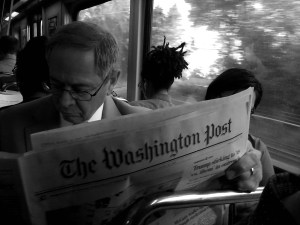
What Does Democracy Look Like? Ride the Subway.

I ride the Washington, D.C., Metro trains essentially every business day of the year and have found it to be, quite possibly, the most democratic place in the country.

I have been riding for over two decades, and I have seen much that goes on, or is likely to happen, on this subway system. Like any public transportation, it has both good features and bad. But the one thing that is most remarkable is that it even happens at all.

The Metro carries between 600,000 and 700,000 passengers every day on average, and there are all kinds of riders. There are the rich and the poor. There are blacks, whites, Latinos, and Asians. There are women and men. There are managers and laborers. There are the young and the old, the athletic and the disabled. There are Christians and Muslims and Hindus and Jews.

All of us each day enter crowded train cars together. We sit or stand next to each other. We sometimes talk but often are silent, minding our own business.
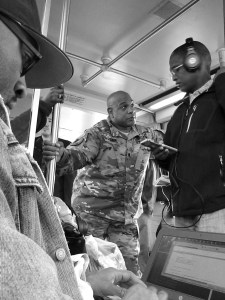
This is normal. But certain types of people would have us believe that this is simply impossible, that there is no way a stable civil society could be maintained that is made up of such diversity. That the only outcome from putting a Muslim and a Jew, or white people and black people–or whichever antagonistic combination you prefer–in a confined space is bloodshed.
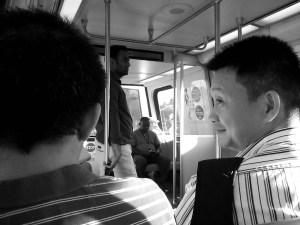
Here is the remarkable thing about the Metro: nobody is forcing themselves upon someone else. Nobody is claiming their opinions are correct and that everyone else is wrong. Nobody is trying to kill one another, or injure, or harass. Yes, there are some beggars and hustlers, some thieves and the occasional person who is either drunk, stoned, or in serious need of a shower. But mostly, every day of the year, we get along.

Security is gained by numbers. Everyone behaves better when there are numerous witnesses. Why? Because we all more or less know how to behave in public–I truly believe this. And not just large numbers of people who look like you or believe as you do. Diversity is its own strength. It is only when we are alone or in a crew of too many like-minded individuals that the trouble begins.

As Metro riders, we accept that each person is on the train for a reason and has somewhere they need to be. Deep down, despite our differences, we accept each other’s essential humanity, that everyone has a mother and/or father who is missing them, or has a spouse they kissed goodbye that morning, or children they are looking forward to seeing when they get home. They have work to do, people to meet. lives to live.

In this time when America feels more divided then I can remember in my lifetime, I take comfort from my rides on the Metro. I take comfort from our demonstrated ability to not give in to our negativity, think outside ourselves, and get along. It is an example of an America that finds strength in diversity. It is an example of what America can aim to be in the coming new year.
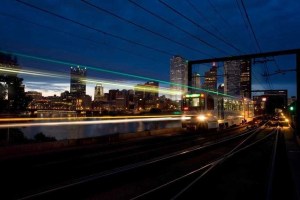
go Uber go. yay.

So, Uber has launched its driverless car service in Pittsburgh, under the ruse that it is a benefit to humanity.

According to Raffi Krikorian, Director of Uber Advanced Technologies Center (ATC) in Pittsburgh, “We think it can make transportation cheaper and more accessible for the vast majority of people.”

Except that there already are cheaper and accessible modes of transportation. They are called buses, trains, subways, vanpools, and trolleys. Public transportation is the cheapest and most accessible forms of transportation for people in urban areas.cityatnight

But what about rural areas, you ask, where there public transit is poor or nonexistent? Good point, but last time I checked, Pittsburgh is not a rural area. Presumably, the delusional Krikorian is talking about Pittsburgh, where Uber is testing this technology, not some hypothetical future service in Wyoming.

Pittsburgh already has public transportation. The Port Authority of Allegheny County operates more than 700 buses and more than 80 light rail vehicles in Pittsburgh and the surrounding area. I guess Uber finds this unimportant.

Every dollar spent on driverless cars ($300 million by Uber alone, according to this article) is a dollar not spent on improving the accessibility and reliability of public transportation. And yes, it is a zero-sum game, people.

As I have said before, this plunge into autonomous cars is ill-considered. But it’s the wave of the future! you say. Maybe it is for the Silicon Valley elites, but unlikely for the vast majority of people.

This is not making our lives better, folks. Someone needs to pull the plug.

Poison Gas, Driverless Cars, and You

The Nobel Prize-winning chemist who discovered the method for creating synthetic ammonia for fertilizer went on to invent the chlorine gas used to devastating effect by the Germans in World War I. He did it because he loved his native country and believed in their ability to win the war.

In the 1930s, a medical scientist was hired by the leading manufacturers of asbestos products to conduct a study of the health risks. He downplayed the negative effects of asbestos exposure on workers at factories and job sites, believing that American industrial progress and fidelity to authority was more important than the human lives being put at risk.

The scientists who worked on the Manhattan Project to develop the atomic bomb used on Hiroshima and Nagasaki did so out of a sincere belief that they were doing their duty to protect America.

Should these people have stopped somewhere in the process and reflected on what, exactly, they were doing? I think they should have.

Science is not always pure, and technology has a way of finding its own worst use.

I think about these things as I read stories of the mad rush to invent driverless cars. We are due for some self-reflection about whether this really is the direction we, as a society, should be taking.

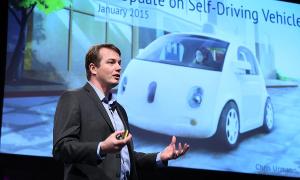
Google's Chris Urmson

Google’s Chris Urmson driving down the wrong path.

The scientists and technicians who are developing autonomous vehicles sincerely believe in the potential benefits of their work, I’m sure. They explain how it will bring mobility to the elderly or the disabled, save countless lives by avoiding car crashes, improve fuel efficiency, and require less space for parking lots.

Who could be against that, right?

Except that driving a car is, most of the time, a solitary act. Single-occupant vehicles on any given workday make up more than half of cars on the road. With estimates ranging as high as 76 percent, it is clear that we still prefer to drive alone.

And other emerging transportation technologies, such as the ride-sharing models that are being pushed by for-profit companies Uber and Lyft, perhaps are not as sustainable as they want us to believe.

In this world filled with countless ways to communicate and travel, we are still consuming resources and are more lonely than ever.

So instead of creating yet more ways of being alone, society instead should be putting additional effort into social means of transportation–bicycles, buses, trains and other forms of transit. It is only by looking each other in the eye day in and day out that we maintain our ability to be civil and retain our essential humanity. That, and it uses less roadway.

The driverless cars that some believe will help humankind may instead be individual coffins.