The Middle-Aged Man and the Aging Parents

I am just shy of 60 years old and both of my parents are still alive. I’m pretty sure this is unusual and puts me in the minority.

Most of the people who are my friends or acquaintances have at least one parent who has passed on. The fact that I have both still above ground puts me and my brother and sister in a small club.

According to research conducted last year, 45% of people who are 59 have at least one parent still alive. That drops to 10% when turning 60. Other research says that upon reaching age 50, the percentage of people who have both parents still alive is around 40%.

To be frank, to have both parents still alive at this stage of life is a blessing and a curse. It is a blessing of course for the obvious reasons; I am able to talk with them, either in person or on the phone, and thus am able to share in their lives for a little bit longer. It is a widely held belief that people like me are fortunate to have both parents still around.
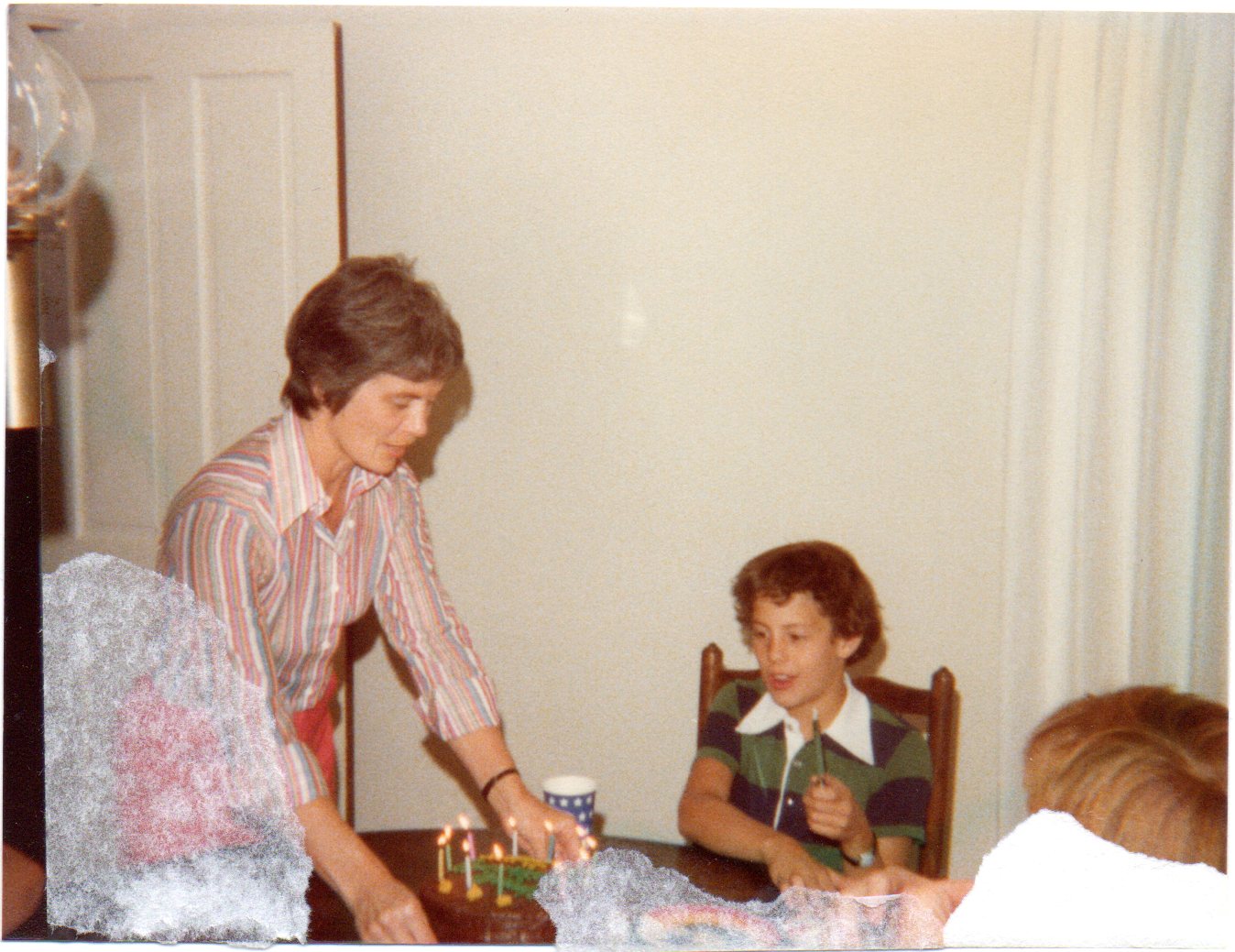
My mother presenting me with a birthday cake, August 1978

But there’s the other part. I would have thought that by the time I was 60 I would be out from under the scrutiny of my parents, free to live my life on my own terms. I have a wife and children to consider; I don’t enjoy having parents to consider as well. They are both set in reasonably comfortable living situations in continuing care and retirement communities (separately because they are divorced). But with every year I and my siblings are taking on more and more responsibility for their financial and health needs, things they can no longer sufficiently do for themselves or that the CCRC is unable or unwilling to do.

I’m not suggesting they depart to suit my needs. However, each passing year adds to the strain. I know it won’t go on forever but there’s a part of myself that I hold in reserve that is directly related to this situation. When will I visit them next? And which one do I visit next, since they don’t live in the same CCRC, or the same city for that matter? What if I have to travel to one of them on short notice because of a medical or other crisis? Is each visit going to be my last visit? Do I need to be still concerned about their expectations for me? Is there something between us that remains to be said?

None of these would be an issue in an alternative situation.

Much as been made of the sandwich generation, often defined as people with at least one parent still alive and at least one adult child receiving financial support. To the casual observer it seems like a minor issue but I’m here to tell you, it is not.

Among other things, parents present something of a conundrum. They beget you in a moment of intimacy that lasts a few minutes at best. Then you are their child for eternity–for better or for worse. It is often said that we don’t choose the families we are born into. Instead we have to make the best of the situation we find ourselves in, and that situation can create financial or emotional pressure that at times can be unpleasant.

In some cultures, much is expected of children with regard to their parents. This includes honoring all of their wishes and financially supporting them through death and burial. If there are people–and I know that they are out there–who have long-standing disagreements with their parents and yet still must honor their wishes and financially support them, I imagine that can create a serious strain.

I am not in that position, thankfully. Even so, I often wonder what it will be like when the day comes. Will I weep? Will I feel relief? I don’t know, and cannot know, until it happens. Because I am just shy of 60 years old and have never known a day in my life without my parents.

Not As Hoped

August 3, 2021 — my birthday — my wife and I were enjoying our first overnight trip since the Covid-19 pandemic began in early 2020. We didn’t know then that it would be the last we’d have together living with the independence we take so much for granted.

We decided to keep it simple, making a road trip from our Maryland home to Pennsylvania and spending time at various points of interest in the southeastern part of the state.

We had a lovely lunch in Havre de Grace, Maryland, in the outdoor seating of a restaurant overlooking the Susquehanna River.

My wife at Tyler Arboretum

We stayed in a hotel in Chadd’s Ford. From there we visited the Tyler Arboretum and the town of Media, where we did some shopping and bought bubble tea.

We had a great dinner for my birthday, outdoors at a nearby restaurant. The summer Olympic Games were occurring in Tokyo, postponed from the year before, and we watched a few events on the television that night.

Our children were off living their lives, moving ahead after the long wait caused by Covid-19. Both called that day.

That summer our oldest had moved out to begin graduate school at Pennsylvania State University. He called to discuss how he and his girlfriend were settling in at their new apartment.

Our youngest was working at a summer camp as a counselor. He called to share how things were going, along with some frustrations regarding the camp staff and how situations were being handled.

Despite the fact that our kids were elsewhere — or maybe because of it — my wife and I felt that we’d mostly left behind us the concerns and restrictions from the past year and a half. It was an enjoyable bit of freedom.

And of hope. We began to see the light at the end of the dark tunnel created by the Covid-19 pandemic. We were feeling that we’d survived, that life would go on, that we could enjoy some of the dividends of having made it this far — through parenting, through a global contagion, through the more difficult years of our lives.

But all that would be halted just five months later. When my wife experienced a ruptured aneurysm in January of 2022, life would not be as we’d hoped.

We’ve spent the last four years adjusting to what is too easily called the “new normal.” Thoughts of a quick recovery have proven to be unrealistic. My wife lost her job and the ability to do many of the things she enjoyed. She applied for (and ultimately received approval for) federal disability payments.

Instead of living out our later years with travel and some well-earned ease, we are now in the positions of being caregiver taking care of one who’s lost their independence.

Perhaps the timing of it all is what’s most frustrating. We put in the work, we endured the hardships, but now are unable to reap many of the benefits.

It doesn’t feel fair. But I also realize that fairness is not a guarantee for anyone.

What’s left is a constant feeling of discontent, softened now and again by some of life’s simpler pleasures. But I can’t help the urge to look once in a while at what’s not available, and think about whether it might ever be available again.

The Better Path

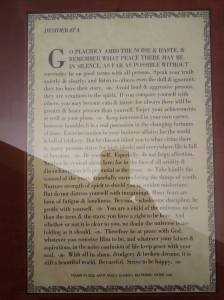
There is a fairly famous poem called “Desiderata.” You may have seen it before. The first lines are “Go placidly amid the noise & haste, and remember what peace there may be in silence. As far as possible without surrender be on good terms with all persons.”

Desiderata

I found a large framed copy of this poem recently as I was packing up my mother’s apartment. A little over a year ago, my mother had a stroke that requires her to live full time in a nursing home from now on. I remember this framed copy hanging in the house I grew up in, so it meant enough to Mom to have kept it for a long time.

My mother is a person of many contradictions. She can be both generous and cold. She is often critical and just as often accepting. She is relentlessly critical of some people but is capable of acceptance and forgiveness.  She voted for Trump but also has spent an unknown amount of money to support children in developing countries and also children with developmental disabilities in this country. She has done many things in her life but complains that she’s not accomplished anything.

The poem exhorts us to be the best version of ourselves and not worry overmuch about what might have been. “You are a child of the universe,” it says, “no less than the trees & the stars; you have a right to be here. And whether or not it is clear to you, no doubt the universe is unfolding as it should.”

And maybe that’s why mom has this framed copy, as something to reflect on when it all seems too difficult, as a way of reminding her to stop once in a while, take a deep breath, and try again. Perhaps we all have things that we put in place to remind of to strive for better and not succumb to the darker impulses. It might be a poem, a book, or a song. It could be rosary beads or a religious artifact. It could be a special picture or movie.

The thing is, even though the poem was parked in my mom’s closet and not hanging on a wall, the fact that she still kept it tells me that she is, at 84 years old, still in the process, as are all of us I suppose.

I’ve said before that knowing one’s parents is complicated, especially for those of us who have our parents in our lives for over five decades, and for those of us who have parents who have been difficult to understand.

So it can’t be said often enough that stopping once in a while, taking a deep breath, and trying again can lead us to the better path.

A Name So Odd It Could’ve Been Made Up

My oldest sister was named Cecilie.

That is not a typo. It is not Cecile, or Cecilia. It is Cecilie (pronounced similar to Cicely Tyson‘s name, but with a short “e” on the first syllable).

My other sister, Jennifer, and my brother, Peter, and I have extremely common names. But Cecilie’s name was as uncommon as ours was common. It was in the polar opposite direction from our names. It was as if my parents began naming their children with a heavy dose of uniqueness, and then changed strategies when number two arrived. With child three and four, they went the straight Biblical route.

img012

Cecilie and me, about nine months before she died.

I feel that Cecilie didn’t like her name much. As the years went by, she seemed more and more tired of the spelling corrections and the pronunciation corrections. My mother once mentioned that she had offered my sister the opportunity to change her name, but she declined. Perhaps my sister was too invested in it by then. I don’t know what name she would have preferred. She never told me.

In fact, no one in my family ever talks about why Cecilie had such a painfully unique name. It is like a taboo subject. We talk more about why my uncle is gay than we do my own sister’s given name.

Maybe I’m the only one who finds it odd that we have two classic Biblical names, one name that was the single most popular name for newborn American girls every single year from 1970 to 1984, and then we have Cecilie, a name so odd that it could have been made up, like Dweezil.

***

Names carry a lot of weight. People name children after themselves, sometimes to the third or fourth generation. They name children after their parents or grandparents. Some people make sure everyone in the family has the same initials. Family (last) names can influence who you are and how people perceive you. Kennedy, Bush, or Schwarzenegger, for instance.

So to question one’s own parents about why a name was chosen over another seems to flirt with one’s own existence. For instance, my father was the third in his family to bear his name, and many thought that his first-born son–that’s me–would also carry the name. Instead, I was given a completely new name.

I have some issues with my name, but to ask why I wasn’t named after my father would make me appear ungrateful. After all, I am healthy and independent. It’s what’s inside that counts, right?

In addition, I find it hard to imagine myself not being Matthew at this point. Would my life have been different if I had another name? Would Cecilie’s have been?

My sister’s life was not an easy one. She had an undiagnosed mash-up of Tourette syndrome, possibly some minor brain damage, and something from the Autism spectrum. She had scoliosis beginning when she was a pre-teen. And she died in 2009 from ovarian cancer a few months before her 48th birthday.

So maybe her name was the least of her problems. But I still wonder.

It Is Hard to Be Kind to Your Parents

It is hard to be kind to your own parents.

Wait…I know that sounds harsh, especially on Fathers’ Day, so let me unpack that a bit.

I think there may be a reason that the Bible tells us–in fact it commands us–to honor our fathers and mothers. Think about it. Why would the ancient Hebrews need God to come down out of Heaven and tell them to honor their fathers and mothers? Is it perhaps because it is not an easy thing to do?

Kindness has been defined by some as empathy and respect for another person.

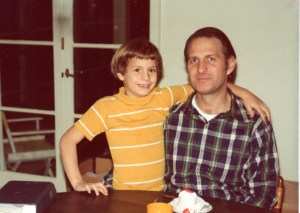
Me and my dad, 1974.

Me and my dad, 1974.

Empathy is the ability to really be inside another person, as much as that is possible. You can do it with siblings and peers. Can you really empathize with your parents?

Parents, by definition, are of an older generation. They are shaped by social and economic forces that did not shape you. They try to pass their “values” down to you, but out of context, those values can be quaint to the point of being meaningless.

Also, parents change over time just like anyone else. Their parenting styles evolve, their belief systems evolve. No matter how much we’d like them to remain the same person we knew as children, they are not, and neither are you.

My mother used to say that each child in a family is raised by a slightly–or sometimes wildly–different person. That would mean that my view of my father and mother is different from that of my brother and two sisters. And it is. My brother, who is younger, is much angrier at my folks than I am, for good reasons. Some writers publish childhood memoirs, only to hear from brothers and sisters that they didn’t remember it that way at all.

Parents also have privileges or struggles that we often don’t have. This can make us sad or angry at them. It can make it very hard to be kind. So how, exactly, are we to empathize?

As for respect, that is also complicated. Respect is something that must be earned from another person. To demand respect because of your position, age, wealth, or any other reason, results in bullying and hypocrisy.

Am I saying that parents must earn our respect? Yes, I am in a way. We cut them a lot of slack, because they are our parents. But ultimately, they have to earn that or risk losing everything that a family is supposed to stand for.

So, it is hard to be kind to one’s own parents. We do it anyway, because we are expected to–by our society, by our culture, by God. But let’s not reduce it to greeting-card sentimentality and phony familial relationships.

Let’s be honest about how hard it can be, and then forgive ourselves for not always being very kind.