I was raised in an evangelical Christian church. I no longer identify as an evangelical. More on why that is some other time.
The thing is, when I was younger, I used to get annoyed by how TV and movies seemed to always depict Christians as Catholics.
Growing up, my church taught that Catholics were not good Christians. They spent too much time on ritual and ornamentation. There was too much memorization of formulaic prayers and not enough memorization of Bible verses. They took their orders from the Pope rather than directly from God (as interpreted by your local pastor, of course). Their faith was too impersonal.
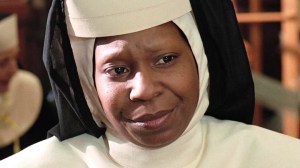 So as a young evangelical Christian, I never identified with the Catholics portrayed onscreen. They may as well have been Muslims, as far as I was concerned.
These days, I don’t really care that “Christian” is equated with “Catholic.” I think it is just easier for the storytelling, so that the audience can readily identify the character as “Christian” and not Jewish or Muslim or Hindu or Buddhist. Of course that assumes that the audience is not seeing “Catholic” as opposed to Methodist or Lutheran or Presbyterian or Greek Orthodox or Jehovah’s Witness or Quaker or Assemblies of God.
Because Christianity does come in many, many flavors. Over the centuries, Christians have diversified into an almost countless number of denominations, sects, cults, and systems of belief. There is no more one type of Christian than there is one style of ice cream.
This is true in spite of the fact that on a regular basis, someone attempts to speak for all Christians. The Pope is a good example. The office of the Pope is intended to be the recognized head of The One Church, Universal and Catholic. What about everyone else? Don’t know; don’t care.
Another example is the increasingly insistent whine of culturally conservative people who identify as some form of Christian. They say various untrue things like “Christians are being silenced” or “Christian voters are being demonized” or “Christians don’t believe in vaccines.” They incorrectly say that to be a “real” Christian you must vote for certain candidates and be in favor of certain cultural, racial, and economic policies (Fun Fact: Jesus said none of these things.) These spokesmen, these self-anointed prophets, tell you what to think, how to read your Bible, which interpretations are approved and which are not.
But that’s just not how Christianity, as laid out by Jesus himself, is. It is varied, diverse, open to many, caring and loving.
There is a saying that’s been around a while in faith circles:
In Essentials: Unity
In Non-essentials: Liberty
In all things: Charity
We could use a bit more of that right about now.
 The Seeker