Truth (But Not Truth Social)

In the spirit of Independence Day, I hold these truths to be self evident.

(In no particular order.)

Everyone’s well being rests on three pillars: a gainful way to make a living; access to health care; and a community of support.

There are good things decent people do when no one is looking.

If this brings me joy, and it’s not hurting you, why does it matter to you?

The world makes more sense if you realize that most people have a reason for being the way they are.

We are more alike than different. We just need to have a shared understanding of what it is we are all talking about.

Love the prodigal, and be patient. See the person fully worthy of moral concern, extending love beyond the prejudices of your upbringing.

We are all on a journey toward acceptance, and some get there sooner than others.

Historically there are people who have a point of view that has been marginalized or silenced.

Science does not replace religion. But science does replace cultural traditions that masquerade as religion.

There are too many arguments that suffer from logical fallacies, based on emotion and ideology, the setting up and knocking down of strawman arguments, and the selective cherry picking and misuse of facts.

We must not support stating beliefs as “truths” that cannot be challenged.

I am divesting from militarism, from war, and investing in community, healing, and true liberation.

Liberalism creates freedom by lifting barriers and creating opportunity.

Tyranny is the arbitrary, unjust, and unrestrained exercise of power, usually executive power by few or one individual.

The State cannot demand that a pregnant person sacrifice their life, their fertility, or their health in service of “unborn life” particularly where a pregnancy will not or is unlikely to result in the birth of a living child with sustained life.

The biggest impediments to business are social inequality, civil unrest, corruption, and environmental degradation.

When high government officials have businesses, you have a conflict of interest. They are not looking at the country’s interest with these projects. They look at their own interest first.

In our times we see an increasing trend for people in the public eye to display ghastly levels of narcissism. These foul-mouthed, low-intelligence, often wealthy sociopaths, devoted to self-aggrandizement and the debasement of anything truly admirable, demand not only our unreserved celebration of their psychosis, but compliance with their ever-changing immoral opinions.

Prejudice, bigotry, and fear are setting the agenda.

The lesser man will win because he is playing to people’s ignorance. He offers empty dreams, but he is giving every voter a bag of rice, and they all want to believe him.

Criminals lie.

Beware of anyone who declares they’re the only one who can solve the crisis and seizes power indefinitely.

Being convinced of your own greatness is one of the surest signs of being crazy.

Racial Justice Teamwork Makes the Racial Justice Dream Work

It’s been called a racial reckoning, a social justice movement, and maybe even a rennaissance. In the nearly two years of upheaval since the murder of George Floyd, there has been an effort for change that shows lots of promise.

From my view, however, this movement won’t move without more awareness, and better coordination. Central to this is people giving up their fractured ways of living and getting on the same path.

In my view, the catalyst for all of this uncoordination is social media. Contrary to the conventional wisdome that social media is empowering, what I see is that it is actually the means by which people stay disconnected and efforts for change remain underwhelming. I may sound like an old fogey by saying that, but hear me out

Case in point: this year in Virginia, Republicans won the governorship in large part due to the candidate constantly talking about the imaginary bogey man of “critical race theory” being taught in primary and secondary public schools.

This claim is absurdly false for many reasons, but that didn’t stop Republican voters from falling for it and electing Glenn Youngkin.

Perhaps people fell for the falsehood because of the volume of unsubstantiated accounts they were hearing/reading in their social media feeds. And here’s the thing: there wasn’t nearly enough pushback from others who knew the facts of the matter. Thus, lies spread unimpeded, like a virus. And Youngkin gets elected.

I think one obvious problem is that people advocating for social change are spending time in a social media sphere that does not at all intersect with the bubble of people opposed to social change (let’s call those people “conservatives”).

Recently, I had an experience that left me wondering about this problem. The college I graduated from put a post on LinkedIn that contained reference to “Latina educator” and a fellow alumni commented with the standard conservative bullshit about identity politics and how those who advocate for change in America are “destroying” this country (his word).

I pushed back by pointing out the flaws in his opinion. Unfortunately, I got little support from either my fellow alumni or the college. In fact, the conservative alumni’s rant got more “likes” than my pushback did. He claimed that he “won” the arguement, and perhaps that is the case (I did not intend for it to be a competition).

So I’m left wondering, where were the social justice warriors? Who had my back in this exchange? Maybe they’re off doing whatever on Twitter or Instagram, planning the next phase of the movement with like-minded people. But that doesn’t help this particular situation.

And the situation is this: given that the goal of social justice work is to call out and challenge the misconceptions and misinformation that support the status quo, perspectives such as those shared by this conservative alumni need to be revealed as what they are and challenged at every opportunity. If this doesn’t happen, then change won’t happen.

I’m not saying that people need to join social media such as Parler where people with regressive opinions take comfort in each other’s company.** That would be like joining the Army to try to change it into a pacifist organization. What I am saying is that when regressive conservative opinion appears on mainstream comment forums, it should not be given a pass.

So next time you see someone going to bat for the social justice team, give them support. Because we are all in this together.


**Parler views those who challenge regressive opinions as censoring free speech. I saw this point of view expressed in the conservative alumni’s emotional rant, that being challenged amounted to “defelection” from the “truth”. I have seen this warped view of freedom, social manners, and consitutionality in other places as well, often accompanied by a tactic where it seems they feel they will “win” the argument if they bluff and bluster long enough and loud enough, and with the right smattering of jargon and insults. But when one tries to probe for nuance, they can’t come up with a logical or coherent arguement.

Music of Hope and Change

In the summer of 1988 I went to see Steve Winwood in concert, and his opening act was Johnny Clegg and Savuka. In case you’re unfamiliar with the band, they were a South African group formed during the final years of apartheid, but their music seems as relevant today as ever.

I don’t remember much about their performance other than liking what I heard and saw. Years later, I picked up a CD of their greatest hits and each time I listen to it, I find more to like.

Their sound is fairly typical of African rock and roll of the era, with the distinctive guitar tone, steady drum rhythms, and chanting vocals. For comparison, Paul Simon’s “Diamonds on the Soles of Her Shoes” has a similar feel.

Here’s the thing: Clegg was a white South African and say what you will about the “white savior” problem in the arts, but his work shows a profound sensitivity to the issues of apartheid. In the songs that I know, the band sings of a pan-African unity, the heartbreaks of racial injustice, and the resiliency of the African people.

One song in particular jumped out at me as I listened to my CD last week. “Asimbonanga” is a slower tempo song with a lot of Zulu lyrics. But it becomes clear upon repeated listening that they’re singing about Nelson Mandela’s imprisonment on Robbin Island, and also about the many South Africans who suffered and died from the systemic racism in that country. At the end of the song, Clegg recites a few names–Stephen Biko, Victoria Mxenge, and Neil Aggett. He is “saying their names,” reminding us that these were people who dedicated their lives, literally, to ending systemic racial oppression. “Asimbonanga” translates as “we have not seen him.”

Johnny Clegg may not have understood apartheid in the same way a black South African would, but he nonetheless risked a lot. According to Born a Crime, Trevor Noah’s autobiography, “Apartheid was a police state, a system of surveillance and laws designed to keep black people under control. A full compendium of those laws would run more than three thousand pages and weigh approximately ten pounds….”

My ticket to see Nelson Mandela, June 30, 1990.

Under the system, it was illegal for blacks and whites to mingle, and the band risked attracting the attention of law enforcement every time they performed in South Africa. Despite the risk, the band was undeterred in its goals. The band was advocating radical change.

Two years after I saw Johnny Clegg and Savuka in concert, Nelson Mandela was released from prison. He made a triumphant tour of America, and my mother, my girlfriend (now wife), and I went to see Mandela live at a large rally in Oakland, California. Even considering the depth of my own white privilege, I understood that the decades of hard work by artists, journalists, and ordinary people had at last yielded results.

I can only hope for the same here in America.

Change Comes from Within

A few years ago, a documentary aired on TV called 1968: The Year That Changed America. It was about how the events, politics, and social movements of 1968, in the words of the producers, “forever changed the modern American landscape.”

Except that, it now would seem that nothing ever really changed at all. America may no longer be legally segregated, but we are as much divided along racial, ethnic, and religious lines as we ever were. The federal government is in chaos and unable to effectively address the real needs of the American people. People are protesting in the streets nationwide. We have a president who is egotistical, unqualified, and more interested in scoring political points than actually governing the country. We have a media industry that is both part of the solution and contributing to the problem. We have an economy that works well for a few people and excludes many. We have people self-destructing through excessive drug use. We have a Congress that appears to be unable to do anything meaningful.

It would appear that we as a country have learned nothing, and it makes me wonder how that happened. It is as if we collectively have an underdeveloped ability to learn, to regulate our own behavior, and to make changes for the better. Perhaps we suffer from multiple personality disorder, that there isn’t just one America but many, many different ones.

Or perhaps we are in recovery from trauma, that the events of 1968 didn’t set us on the road to improvement but rather created the dividing line between before and after. Most people who suffer a traumatic event view it as a pivotal point in their lives, that they are not the same person after that they were before.

Maybe America continues to struggle with coming to terms with this new sense of self, and we’re not there yet. But are we trying? Sometimes I wonder. Many are, but are there enough of us to create true change? Is change gonna come? Or will we just anesthetize ourselves and turn a blind eye to the real work that needs doing.

I would like to think we have it in us to do the work. When we’re at our best, we do. But, as with anything, we have to want to change. And it is our loss of we don’t.

What is new about American police brutality towards black people? Why did it take the death of George Floyd for the people of Bristol to recognize that they had a monument to a slave owner in their city’s midst? The real question is not what should people do but will people go back to sleep or not? Will we have learned? – Dr. Gabor Mate


A genuine change must first come from within the individual, only then can he or she attempt to make a significant contribution to humanity. – Dalai Lama


Happy National PKD Awareness Day

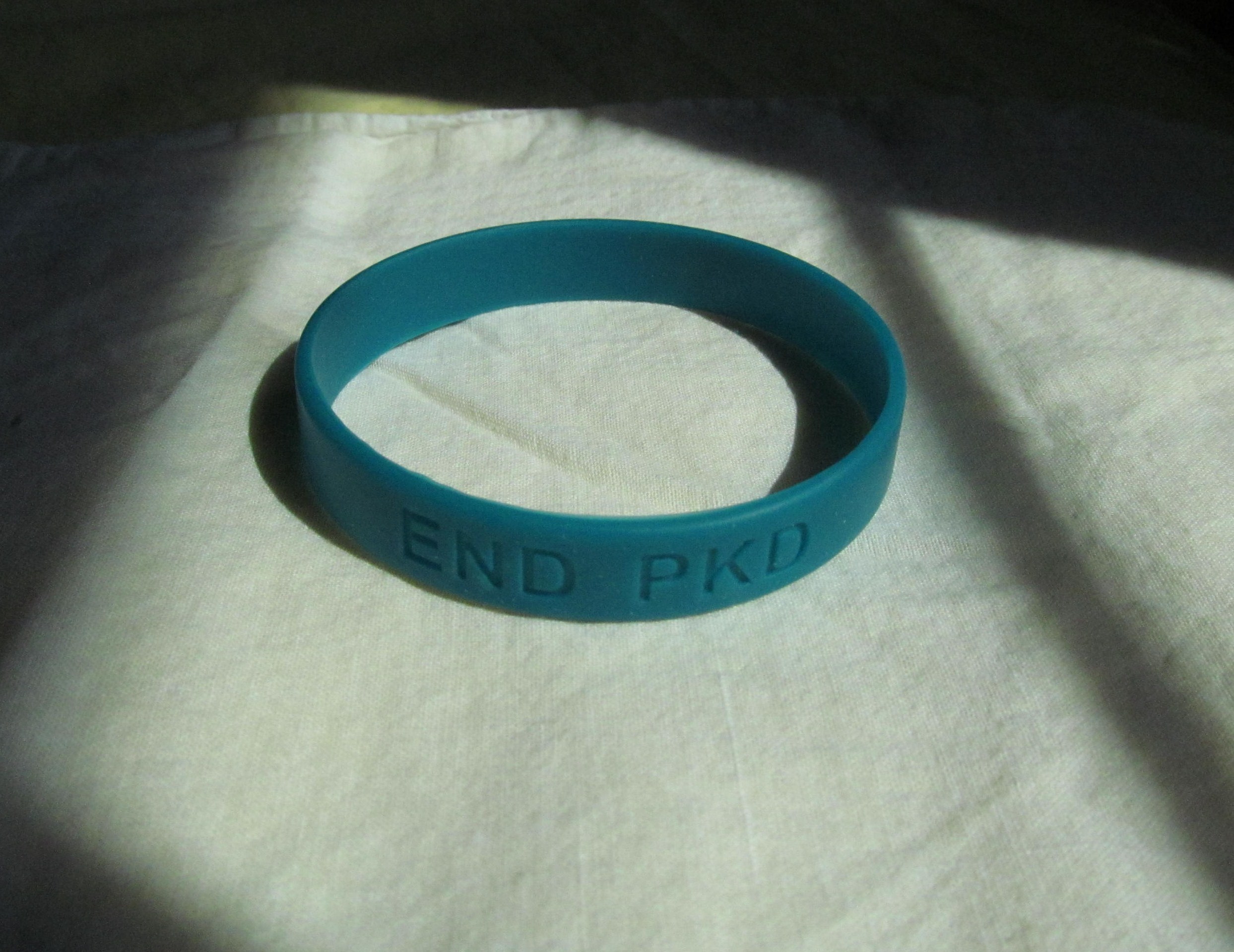
I have a wristband. It’s one of those silicone rubber types, in a teal green color, and in six letters it delivers a simple message: END PKD.

When I wear my wristband, no one asks about it. It is overlooked, much like the disease it represents, a genetic disorder that is one of the four leading causes of kidney failure in the nation.

end_pkdPolycystic kidney disease, or PKD, affects millions of people worldwide. My wife suffers from it. Cysts filled her kidneys to the point where they became more than twice their normal size and began to cease functioning.

There is no cure for PKD. The outcome is always the same: sooner or later, the sufferer reaches end stage renal failure. At that point, the only options are dialysis or an organ transplant.

Last year, my wife, who is in her mid-forties, received the news that her kidneys were failing. She was put on the national organ transplant waitlist but we both knew that waiting for a donor to come forward was a long shot. The idea of spending years dependent on dialysis seemed both unpleasant and medically less than ideal. A living kidney donation, we were told, was the best alternative. But whose kidney?

In February of this year, I decided to offer myself as a potential donor. If I said it was an easy decision to make, I’d be lying, since there were many factors to consider. We do not share the same blood type and we are obviously unrelated, so I thought it might not work out. But making the offer and getting screened was a small act that felt like the right thing to do.

As it turned out, the screening showed I was a suitable match. On August 15, we had the transplant surgery. I came to believe it to be a way to move forward and do something positive for her, for our children, and for our families.

As you read this, my kidney is working in my wife in place of the ones that PKD destroyed. However, this does not end PKD for her or for the population. Much has yet to be done to understand how the disease works. Current research holds out hope that, by reducing cyst growth with appropriate medication, those with the disease can delay end stage renal failure and live with their own kidneys for as long as possible.

Today is National Polycystic Kidney Disease Awareness Day. I am wearing my wristband both as a symbol of where we’ve been and as a reminder of what we still need to do. If you see me, ask me about it. I’ll be happy to tell you what it means.