The Trouble With Being American

I have no cultural identity other than “American.” I do not consider myself to be Irish-American or African-American or Hispanic-American or any other cultural identity that I can fall back on. So you can understand my displeasure at the current state of America.

The United States is my country. I was born here and have lived here all of my life. Going back to the early 1700’s, my ancestors have been born here, lived here, and are buried here.
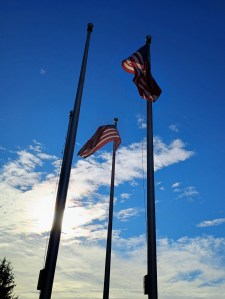
This is the only criteria for American citizenship–be born on American soil (see the U.S. Constitution, 14th Amendment). There are no other criteria, tests, or qualifications.

Some people try to make the claim that “real” Americans are those who typically exhibit outward displays of patriotism, have a simplistic view of our nation’s origins, and hold narrow views of what an American should look like. But there is nothing to support that claim. It is just personal opinion (that can be safely ignored).

Singing the National Anthem more loudly does not make you more American. Waving the flag more vigorously does not make you more American. Having more ancestors here does not make you more American. Serving in the military does not make you more American. Being Christian does not make you more American. These things simply don’t.

Unfortunately, these same people also claim to know what America really is (as opposed to what?) and refuse to acknowledge that there is, or even might be, a more expansive, messy, diverse, and complicated understanding of our country.

And the sad thing for me is, that version of the “real” America–the one currently being heavily promoted by Donald Trump and his MAGA co-conspirators–is not my America. It is not the America that I see, or ever want to see in my lifetime. Instead, it is some strange conflagration of illusions, misinformation, wishful thinking, and self-righteousness with large doses of self-delusion, racism, and xenophobia mixed in. (MAGA Americans like to say that those critical of their political positions must hate America. In my view, the America in the “Make America Great Again” is a fictional, made-up place that they somehow think we can return to, making such criticism absurd.)

So where does that leave me?

I am an American in an America that I don’t recognize. When the stars and stripes is displayed, how am I supposed to feel? How can I say I’m proud to be an American when the America that is currently on display is a cruel, mentally unstable place that goes against my integrity and inner sense of what an American is supposed to be?

Sadly, I feel that the America I grew up in, that I learned about in school and on the street, and that I believed in, is rapidly disappearing. Once it is gone, and replaced with something unrecognizable, what then?

America Throws Hissy Fit, Elects Class Bully President

In a temper tantrum over things not going their way, America chose an aged convicted criminal and bully as their chief executive.

Citing no valid complaints, Americans overwhelmingly opted for a chronic liar who utterly failed in his previous attempt at running the country, to run it again.

“Waaaaah! Border security! Waaaaah!” said a voter named Adolph, who withheld his last name out of fear that people would learn about his belief that White people are the Master Race.

When asked what policies Donald Trump would be effective at implementing, Adolph said “Waaaaah! No socialism! Waaaaah!”

Voters once again rejected a woman for president, citing sexism and misogyny. And racism. But mostly sexism, and some racism thrown in for good measure. But definitely sexism.

And racism. Yes, that too.

An average voter, who identified himself as Vladimir, said a woman cannot be trusted to run America.

When it was pointed out that women have successfully run Great Britain, Germany, Italy, Ireland, Finland, Pakistan, India, the Philippines, Australia, and New Zealand, he said “Sure.”

When asked to clarify, Vlad said “America will never have a woman as president as long as a single man remains breathing.” He then commenced to flex his muscles for this reporter.

Polls show that Vlad, Adolph, and other average natural born Americans lean heavily toward a dystopian style of government, where guns are plentiful and civil rights are few.

Also, a majority of legal, registered voters said they are the downtrodden minority fighting against an overwhelming number of illegal noncitizens.

Plans are underway for the most spectacular inauguration of any president ever in the past or the future. Sources close to the planning, who have requested to remain anonymous due to threats from the dangerous radical left, have confirmed that the ceremonies will include detonation of a nuclear device.

Did You Serve?

Years from now, our children and our children’s children will ask us what it was like to live through the Great Covid-19 Pandemic.

WW2 ration stickers

By that time, it will be written about in history books and the subject of documentary films. It will seem distant and abstract to future generations, in the same way that World War 2 seems distant and abstract to my generation.

It is reasonable to expect questions from these young people as they seek to understand the magnitude of what we have gone through. These will be the same types of questions that my generation would ask someone who lived through World War 2: Did you serve? What was it like? Did you support the war effort? Were there things about life on the home front that were unusual, out of the ordinary? How did you feel about the restrictions and rationing that the government set up?

With the pandemic, the questions will be slightly different but they will be analogous to the questions about World War 2. I have listed a few here:

Questions for the WW2 generation Questions for the Covid-19 generation
Did you serve? Were you a doctor, nurse, or other health care worker directly caring for people sick with and dying from Covid-19?
Did you serve honorably?* Did you as a health care worker support and reinforce the public health measures put in place to slow the spread of the disease?
Did you support the war effort? Did you not flaunt or actively oppose vaccination and face mask requirements? Did you do your part to socially distance and cooperate with public health measures?
What was the home front like? How did it feel to have to wear masks in public almost all the time; quarantine or isolate for days, weeks, or months; have schools move online and events cancelled; and make decisions about the relative risk of what would otherwise be a normal, everyday activity?
Did you lose a friend, loved one or family member? Did you lose a friend, loved one or family member?

Two years into this pandemic, I don’t think it is too early to begin pondering what our legacy will be. How well did we handle this crisis? Did we come together as a nation to fight the threat? If not (and clearly, we have not), why didn’t we? What prevented us from doing so, and what will that mean for any threats, domestic or foreign, that arise in the future?

Sadly, people are beginning (or maybe it’s been going on a long time) to view fellow Americans with suspicion, not unlike, I imagine, the French who collaborated with the Nazis and the French who actively fought against the Nazis. That makes it very hard to remain united as a country.

Will this country of the people, by the people, and for the people survive on this Earth?

I hope so. But in the meantime, there is work to be done.


*People presume that everyone who serves in the military serves honorably. However, the facts are that some people do not, and end up being court martialed and dishonorably discharged. It’s not a comfortable question to ask, but it’s valid. There reportedly are doctors, nurses, paramedics, and others who have refused the vaccine, spread misinformation about ivermectin and other things, and distributed counterfeit vaccine cards. This is not honorable behavior.

Things That Did Not Cause the Collapse of Society: A List

This week, a county school board in my area took a bold step in the direction of diversity, equity, inclusion, and frankly, justice. You may have heard the news.

Those opposed to this action have offered a variety of disconnected reasons that this was the wrong thing to do. They range from claims that the action will ruin our children (it won’t) or usurp parental rights (no more than other public education actions) to claims that the action will somehow interfere with their religious freedom (to discriminate). (Here’s just one example of hyperbolic reaction.)

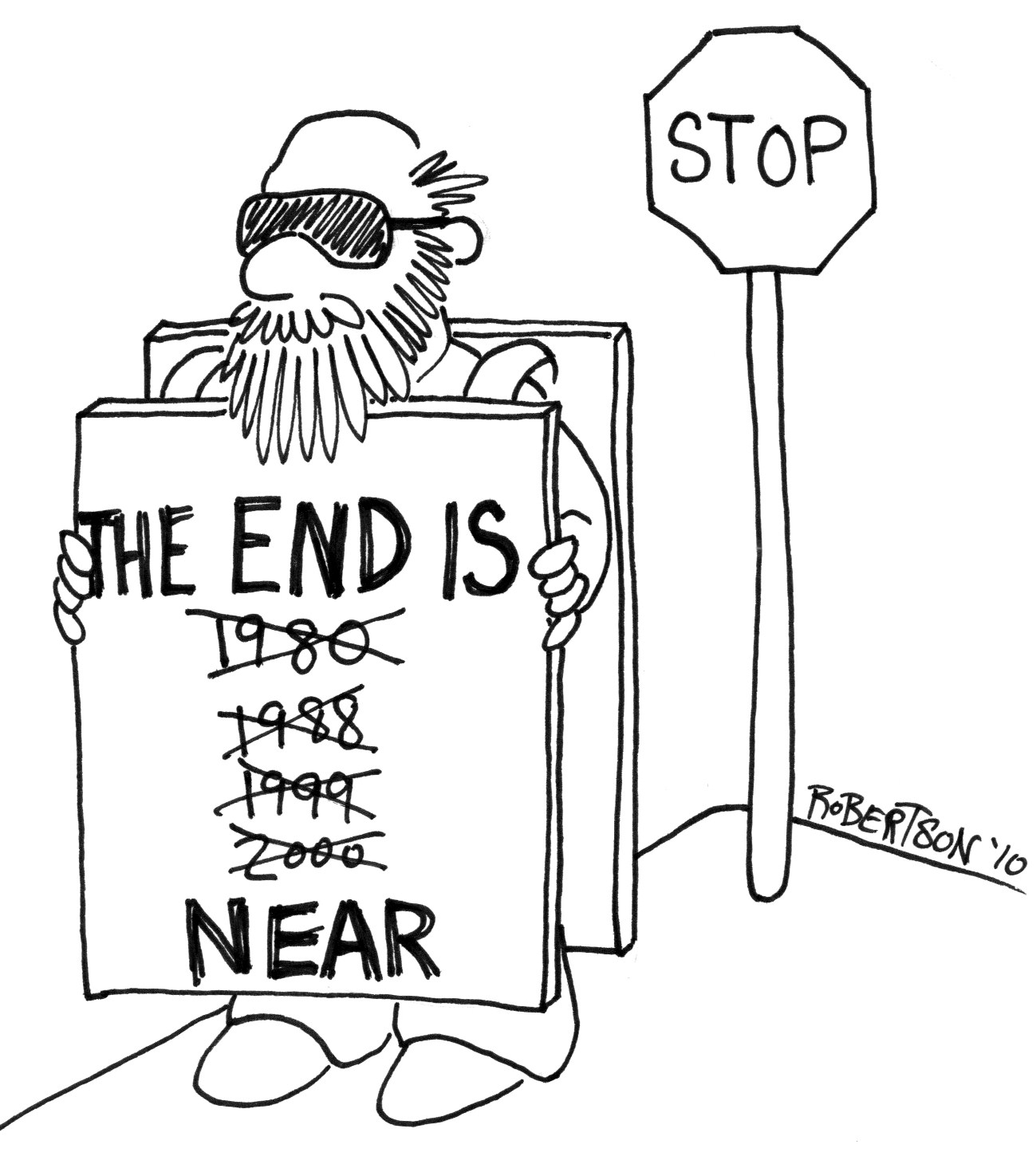
I would bet money that privately, people also are thinking that it is another step in the downfall of society, another inch closer to the end of the world.

People opposed to positive social change–let’s call them conservatives–have argued for literally hundreds of years that steps taken to improve a pluralistic society and advance social justice will lead to the collapse of civilization. Which we know now is absurd. But conservatives still use that argument today anyway.

So I thought I would make a list off the top of my head of some of the things that over the years did not in fact cause social collapse (approximately in reverse chronological order):

  • the legalization of same-sex marriage
  • equal funding for women’s education
  • affirmative action
  • allowing women to enroll in historically men’s schools
  • access to contraceptives
  • the legalization of interracial marriages
  • the integration of public schools
  • the integration of the Army and Navy
  • women working outside the home
  • giving women the right to vote
  • giving Blacks the right to vote
  • ending race-based enslavement of other people
  • removing the Church as an arm of the State
  • not doffing one’s hat or bowing to one’s “betters”
  • the scientific method

What does lead to a breakdown in social cohesion? Here a few things:

  • police brutality and a militarized State (ongoing)
  • lies and misinformation (ongoing)
  • environmental degradation (ongoing)
  • income inequality and entrenched poverty (ongoing)
  • unequal access to educational or economic opportunity (probably ongoing)

As usual, I am thinking of America as I write this. I realize that many other countries are at different stages of their journey toward a modern society and I wish them the best.

America can and ought to be better than we often are. I’m constantly amazed and saddened by how many Americans want to turn back the clock and erase so much of the hard-won progress that has been made over the centuries. At the same time, I understand that those people whose identity is threatened the most are the ones who will scream the loudest.

Which raises the question of who would create their identity around maintaining injustice and inequality? Think about it.

I, for one, think that regression to some imagined former “greatness” at the expense of general social improvement would be mistake.

P.S. It is good to remember that one’s personal opinions about how things “ought to be,” no matter how strongly held or deeply felt, are not “truths” that cannot be challenged. They are only opinions and can be heeded or dismissed as circumstances warrant.

Change Comes from Within

A few years ago, a documentary aired on TV called 1968: The Year That Changed America. It was about how the events, politics, and social movements of 1968, in the words of the producers, “forever changed the modern American landscape.”

Except that, it now would seem that nothing ever really changed at all. America may no longer be legally segregated, but we are as much divided along racial, ethnic, and religious lines as we ever were. The federal government is in chaos and unable to effectively address the real needs of the American people. People are protesting in the streets nationwide. We have a president who is egotistical, unqualified, and more interested in scoring political points than actually governing the country. We have a media industry that is both part of the solution and contributing to the problem. We have an economy that works well for a few people and excludes many. We have people self-destructing through excessive drug use. We have a Congress that appears to be unable to do anything meaningful.

It would appear that we as a country have learned nothing, and it makes me wonder how that happened. It is as if we collectively have an underdeveloped ability to learn, to regulate our own behavior, and to make changes for the better. Perhaps we suffer from multiple personality disorder, that there isn’t just one America but many, many different ones.

Or perhaps we are in recovery from trauma, that the events of 1968 didn’t set us on the road to improvement but rather created the dividing line between before and after. Most people who suffer a traumatic event view it as a pivotal point in their lives, that they are not the same person after that they were before.

Maybe America continues to struggle with coming to terms with this new sense of self, and we’re not there yet. But are we trying? Sometimes I wonder. Many are, but are there enough of us to create true change? Is change gonna come? Or will we just anesthetize ourselves and turn a blind eye to the real work that needs doing.

I would like to think we have it in us to do the work. When we’re at our best, we do. But, as with anything, we have to want to change. And it is our loss of we don’t.

What is new about American police brutality towards black people? Why did it take the death of George Floyd for the people of Bristol to recognize that they had a monument to a slave owner in their city’s midst? The real question is not what should people do but will people go back to sleep or not? Will we have learned? – Dr. Gabor Mate


A genuine change must first come from within the individual, only then can he or she attempt to make a significant contribution to humanity. – Dalai Lama