Because I Am Involved in Mankind

As I said in a previous post, lies spread because people want to believe them. They need to believe because often it goes to their very identity. Without those lies, they would lose their sense of self.

And people are fed lies for related reasons. Primarily, it is to create an atmosphere of confusion, out of which power brokers, politicians, and cultural elites can solidify and reinforce their power.

I just read an insightful article on this topic, laying out the framework under which lies are used to seize and retain power. Written by Leo E. Strine, Jr., a law professor, and published by Harvard Law School, it says that “The utility of those [false and misleading] issues is to inculcate a sense of identity and fealty in the masses who serve as their power base.” (“Inculcate” means to impress upon the mind through frequent repetition–I had to look it up.)

Think about it: picture for yourself someone–either in person or online–who is vehemently defending the position that all abortions should be illegal everywhere, or that climate change is only accepted by those “indoctrinated” by the “woke”, or that vaccines cause harm and create no health benefits. When you try to present an alternative to their worldview–using facts, logic, or reason–what happens? They get angry, they get upset, they start name-calling, some even begin to issue threats.

Why? Because they are scared. Like a cornered wild animal, they are lashing out.

And why is that? Because your perfectly legitimate views–based on facts, logic, and reason–threaten their very existance.

Because those lies have created for them the equivalent of family, of The Team, of Us (versus Them). It is protection from the terrors of an uncertain future. It is where they feel most safe and secure, even when, paradoxically, they are actually embarking on a path toward their own harm (such as with the refusal to get vaccinated against preventable disease, or the refusal to take rational action to prepare for a changed climate).

What then? We have seen hints of what is coming: fanaticism, tribalism, dissolution, violence.

Would it not be in everyone’s best interest if those stoking the fires with their self-serving lies were to turn down the rhetoric? Show some humility? Show some humanity and acknowledge that all lives are interconnected?

Strine’s advice is this: “When someone denies fact, mainstream institutions should call that out and refuse to legitimize their misinformation tactics.  Lies should be labeled as lies.”

That’s as good a place to start as any.
Kids These Days

We have a problem. There is a generation of young people, now entering the workforce, who have become disillusioned with the largely unrealized lofty ambitions of Big Tech.

Yes, these young people have been raised with this technology and accept it as part of daily life. But for them it holds neither magic nor promise.

Increasingly, many of these young people want to free themselves from Big Tech and it’s demands of loyalty. They want a life lived more on their own terms, working with physical materials and time honored processes. They want to grow food, weld metal, make things with their hands.

But Big Tech is a hungry monster. It insists that young people enter STEM careers. It demands that they use established platforms and no others. It tries to make sure they don’t think for themselves, that they just become more bricks in the wall.

It’s a problem.

There will be a backlash. Those who are willful enough will resist the demand to enter a STEM career. They will become artists, musicians, farmers. Big Tech will complain about how there are not enough trained workers, that America will lose its business edge.

Whether society chooses to make these free thinking young people feel bad about their choices, or instead embraces their aspirations — that is up to us.

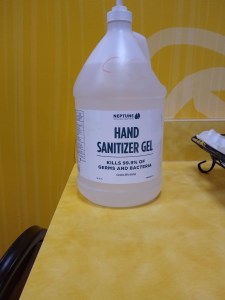
Hand Sanitizer and the Disease

This week I happened upon the fact that the Food and Drug Administration is updating their policy for testing alcohol hand sanitizers for the presence of methanol.

The notice rightly points out that methanol–unlike ethanol, the alcohol in beer, wine, and spirits–is poisonous. It goes on to say that “FDA became aware of reports of fatal methanol poisoning of consumers who ingested alcohol-based hand sanitizer products that were manufactured with methanol or methanol-contaminated ethanol.”

What??

Surely I misread that. Why is anyone ingesting hand sanitizer? Do they mean just accidentally licking it off one’s hands? Should I be concerned?

So with a little internet sleuthing, I tracked down one of the FDA’s sources of information, a study published by the Centers for Disease Control and Prevention. The study says that “cases of ethanol toxicity following ingestion of alcohol-based hand sanitizer products have been reported in persons with alcohol use disorder.”

So that’s it. People suffering from serious alcoholism have been known to be so desperate as to resort to drinking hand sanitizer.

It’s hard for me to imagine someone having so little to live for that they are seeking solace in whatever small, temporary effect one can get from consuming hand sanitizer.  These are people who need serious help, who probably have lost all connection with friends and family, and with the beauty that still can be found in life.

So the FDA’s response to this is to ensure that hand sanitizer does not accidentally kill these people.

Wouldn’t the more humane response be to actually help these people live a better life? Am I the only one who thinks that we are merely addressing symptoms here without even pretending to try to cure the disease?

Do either the FDA or CDC acknowledge this gap in response?

No.

The FDA takes a formalistic approach by pointing out that methanol is not an acceptable ingredient in any drug product and should not be used due to its toxic effects.

The CDC takes a hands-off, public health approach by admonishing against drinking hand sanitizer and requesting that public health officials keep track of times when people do.

But compassion for the down and out? No.

Much can be done in the United States to alleviate poverty and suffering. We do, in fact, know exactly how it can be done. However, we, The People, have generally chosen not to do it. And yes, it is a choice.

That says so much about us, doesn’t it?

Smoking Outside

I acknowledge that smoking tobacco can lead to various health problems. This today is widely known. Anyone who claims to not know has not been paying attention.

Specifically, the bad effects of smoking arise from first hand smoke. As in, I choose to smoke a cigarette and I am inhaling the smoke into my own lungs of my own free will.

So let’s get to the other stuff.

It has gotten to the point where smoking anything is disallowed nearly everywhere. So I think we have unfortunately moved far beyond what is protective of public health and into a new phase of social disapproval.

Specifically, I wonder why smoking is explicitly disallowed in places where it won’t harm anyone other than the smoker. Outdoors is my primary example. Who is being protected when smoking is forbidden outside and away from other people?

There are legitimate concerns about second hand smoke when the smokers smoke all day in enclosed spaces such as a car or at home, and the nonsmokers have no choice but to regularly breathe the smoke into their lungs.

That is not the case outdoors. Smoke blows away on the wind, yes? It is dispersed, becomes less concentrated. So unless you are sitting outside within a few feet of a smoker who is blowing smoke directly into your face, I don’t see that there is a problem.

And if a smoker is blowing smoke directly into your face, that is extremely inconsiderate and you have every right to ask them (tell them?) to stop. It is basic manners and social intelligence.

So back to the ban on outdoor smoking. Why is that a thing? Perhaps it’s because those in charge of such outdoor spaces feel that people cannot be trusted to self-police their own smoking with civility.

Honestly, common courtesy does seem to be diminishing these days, as more and more people think it’s okay to issue death threats when they have a simple disagreement. Maybe making a blanket ban just removes the potential for violent dispute.

But we are dangerously close (if we’re not there already) of moving from legitimate social disapproval for the sake of public health* to a moralistic society where smokers are seen as flawed, dirty people.

Maybe that’s what was intended all along. I don’t know. But it’s never a good idea to make an entire class of people somehow less human. We’ve seen where that can lead and it’s nowhere good.


*Legitimate social disapproval for the sake of public health includes the disapproval of, among other things, poor personal hygiene (not washing hands, defecating outdoors, etc.), not wearing seat belts in motor vehicles, not wearing face masks to prevent the spread of infectious disease.

The Trending of Trends

For a few years now, Google has had an idiotic feature by which a user can see “trending searches.”

In case you have not been paying attention, “trending searches” are search terms or strings that are very popular with the masses. I don’t know how Google determines this (frame of time, country of origin, etc.) but I do know that Google records every search everyone ever makes in the search engine. So these trending searches somehow compile this for display, from all the billions of searches being executed every day.

Presumably, Google assumes that users will see these and think to themselves “Hey, everybody is searching for information on third round draw carabao cup, so maybe I should too.”

This is the twenty-first century equivalent of herd behavior, people madly rushing about (virtually, of course) trying to get to the next great thing, and beat others to it in the process. It is mindless behavior, mob mentality.

And it is of course an extension of Google’s autocomplete feature, where it suggests searches based on what you begin to type in the search box. These are searches that, according to Google, “have been typed previously by Google users or appear on the web.”

Evidently, Amazon now also thinks this is a great idea and is using it. Amazon, of course, logs every search everyone ever makes on their platform too.

I don’t know how successful this feature is, but with Google it cannot be turned off. (Apparently, you used to be able to turn it off but I don’t see that option now.)

Believe me, I would if I could.

Because I will never click on a trending search. Why? Because I just don’t care. I don’t care about what searches other people using, and I don’t care about that for which they are searching. Why should I? They are not me, and I am not them.

I am myself, and I’m reasonably self-aware. Other people’s trending searches will have miniscule relevance to my life. I would think the same is true for most other people.

And yet here we are.